Custom Perforated Silicone Fiberglass Bread Molds
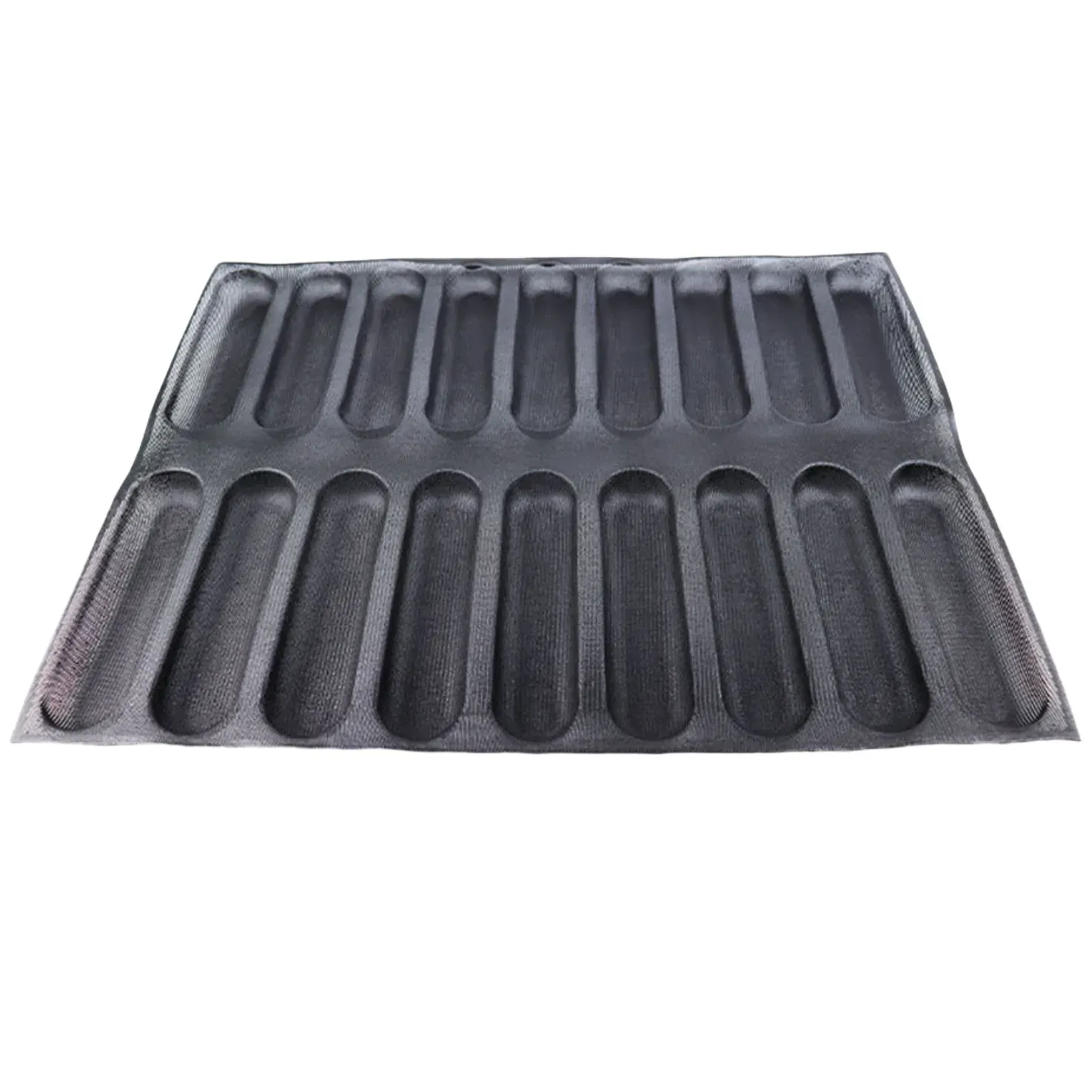
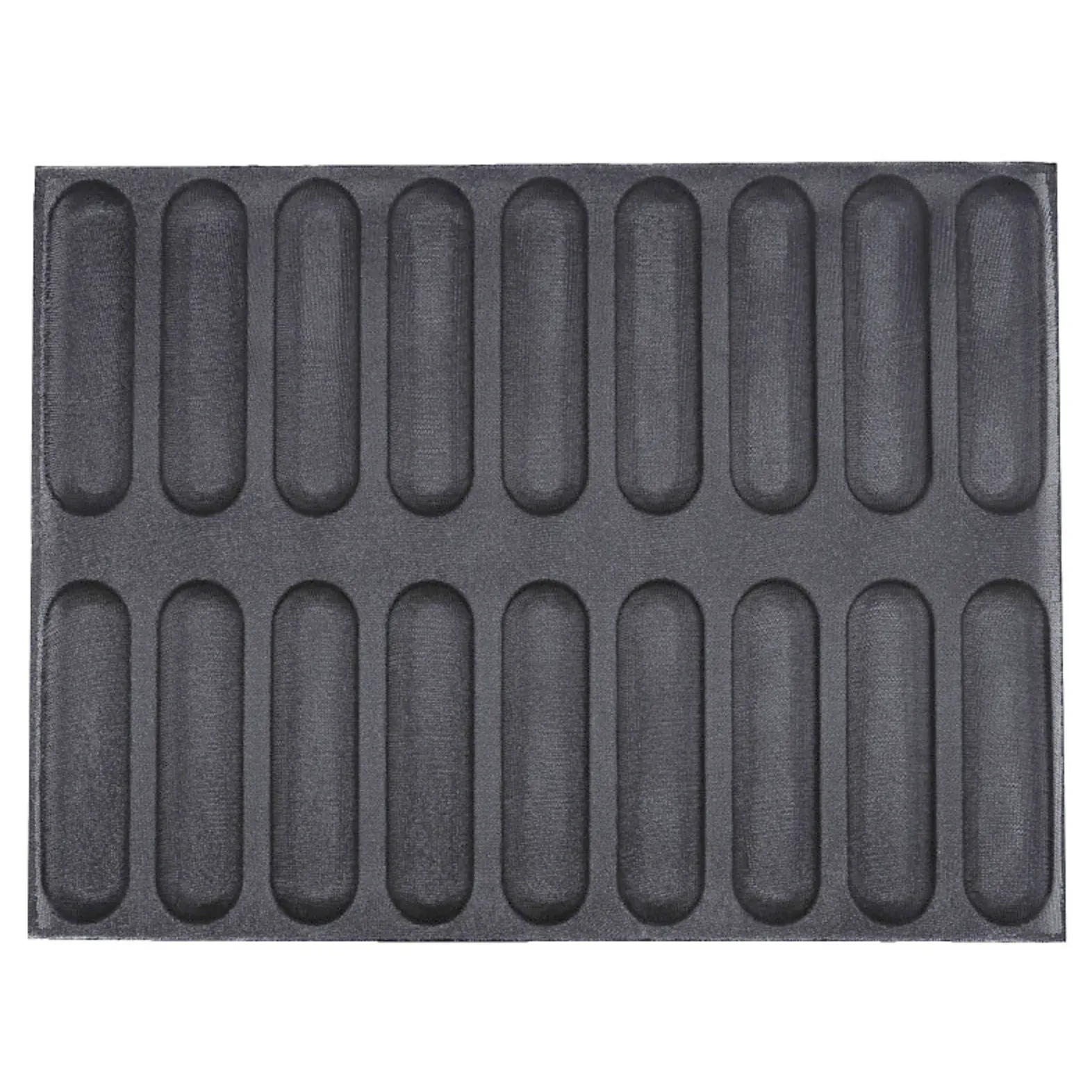
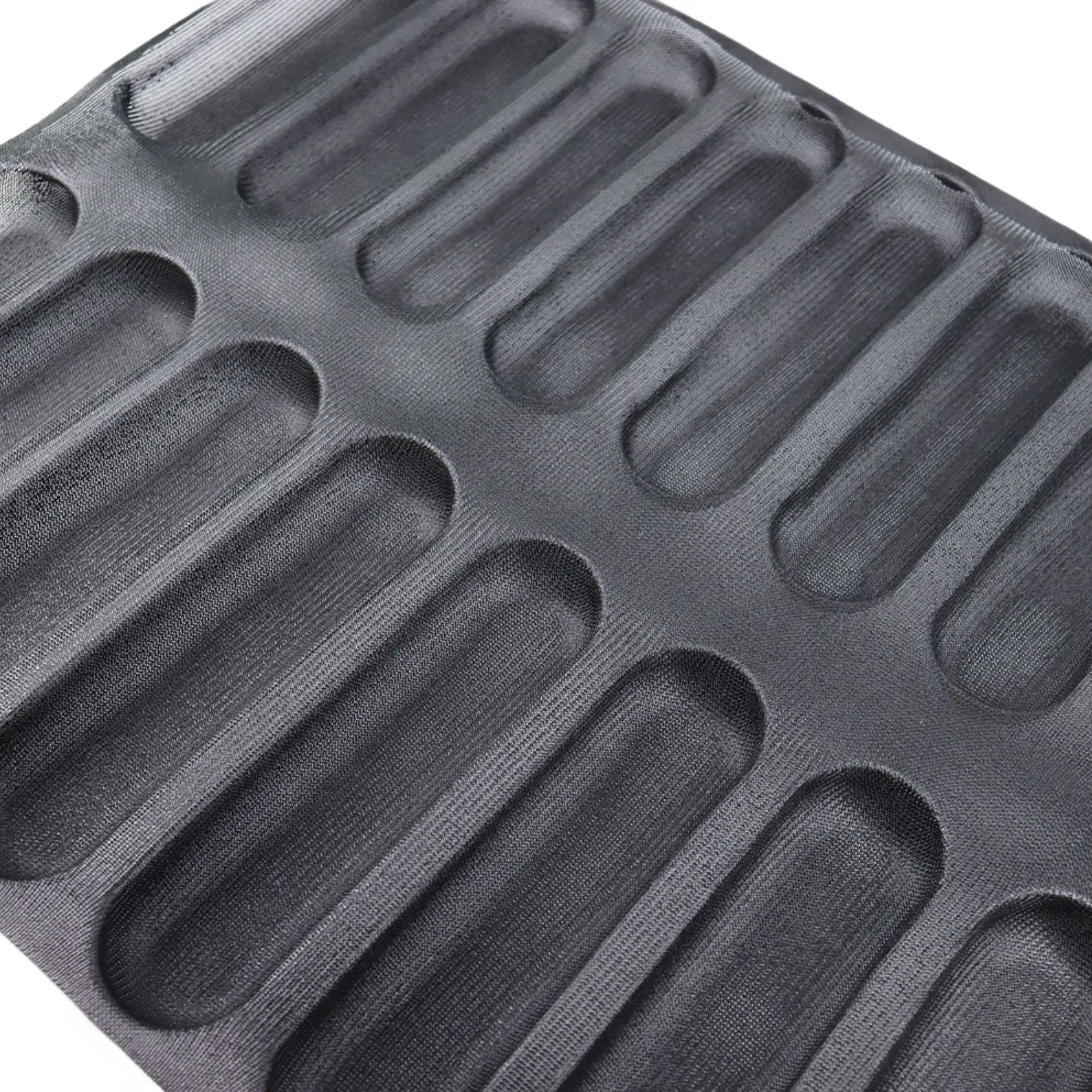
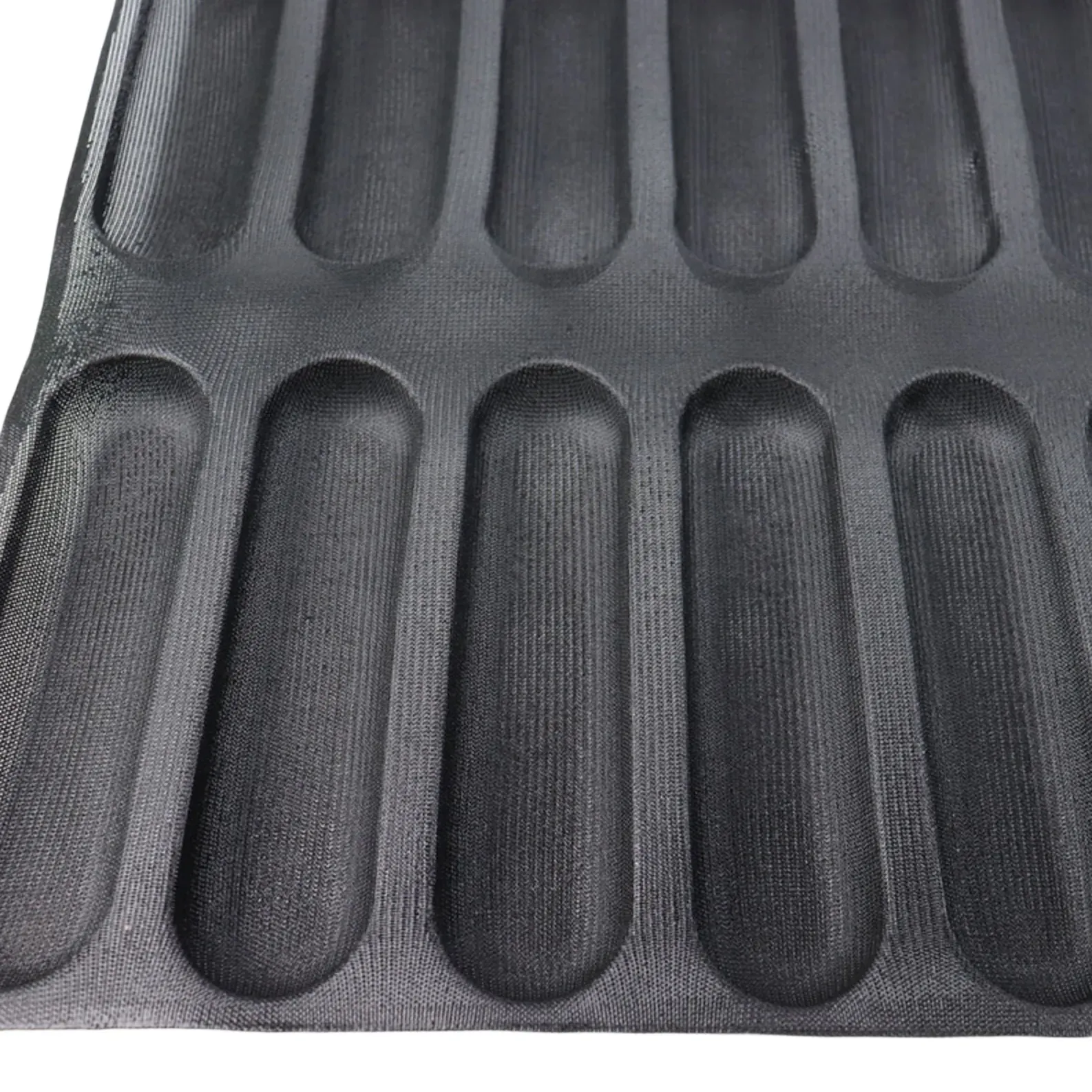
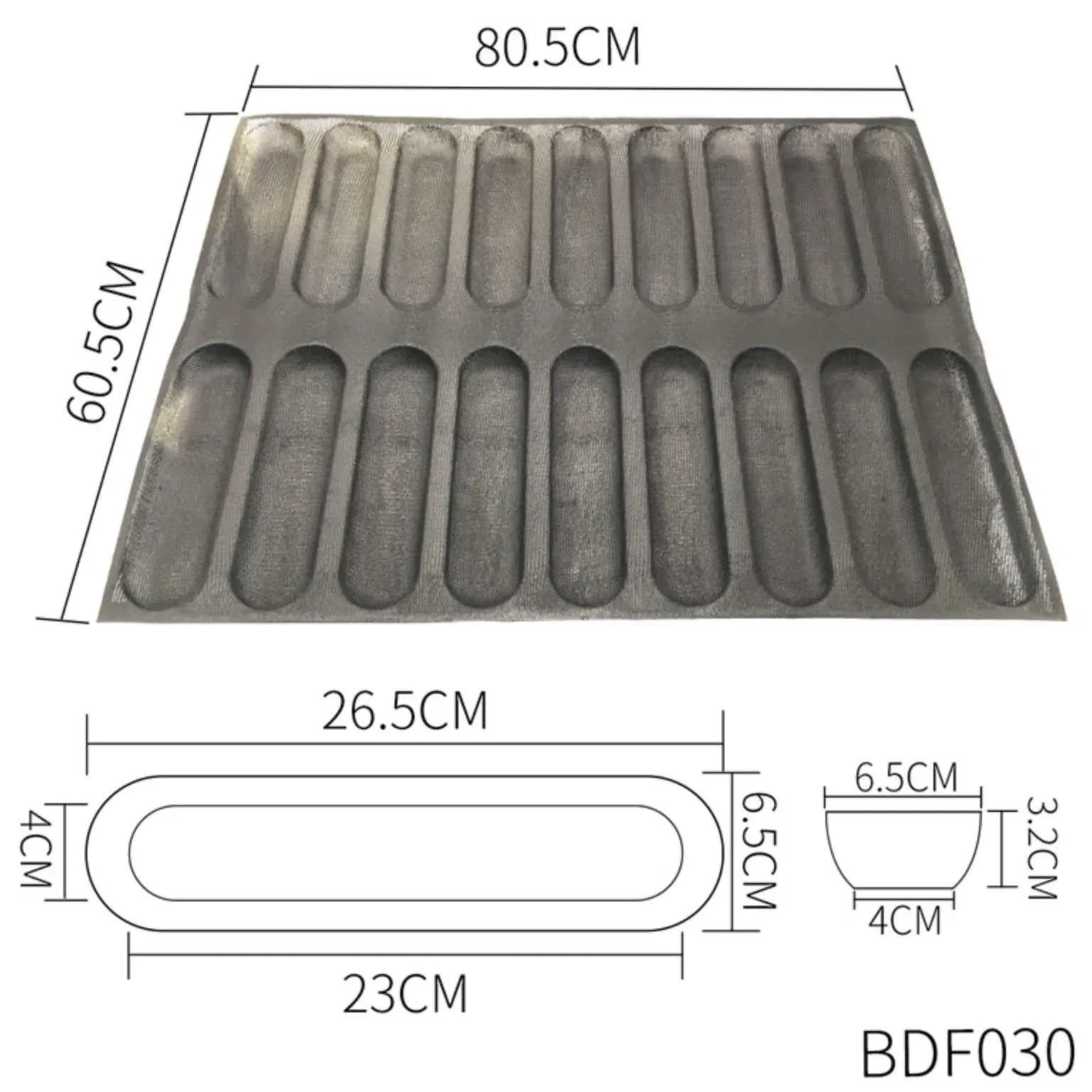
Custom perforated silicone fiberglass bread molds are made for bakeries that need a repeatable loaf or roll shape with airflow below the dough. We develop the panel size, cavity geometry, perforated base and edge finish around your tray, dough weight and baking process.
Product overview
Custom perforated silicone fiberglass bread molds are made for bakeries that need a repeatable loaf or roll shape with airflow below the dough. We develop the panel size, cavity geometry, perforated base and edge finish around your tray, dough weight and baking process.
Product highlights
- Custom cavity layout for repeatable portioning
- Breathable woven bases support a drier underside than solid silicone molds
- Fiberglass reinforcement helps the large-format mold stay flat during handling
- Rounded cavities release delicate dough with less tearing
- Molded sealed perimeter protects the textile edge
- Panel weight and handling characteristics engineered around the final cavity geometry
Procurement data
Technical specifications
Final specifications are confirmed against operating conditions and order requirements.
| Product Name | Perforated Silicone Fiberglass Bread Mold |
|---|---|
| Material | Food-contact silicone-coated fiberglass fabric with molded silicone cavity structure |
| Surface | Molded long-loaf cavities with a fine woven perforated base, smooth silicone rim and cavity sidewalls |
| Reinforcement | Fine open fiberglass weave embedded in the cavity base; molded silicone frame maintains cavity shape |
| Temperature Range | Recommended continuous baking range: -40°C to 230°C (-40°F to 446°F); avoid direct flame and sharp metal tools. |
| Airflow / permeability | Perforated |
| Thickness Options | Cavity wall, woven base and reinforced rim construction are selected according to mold size, dough handling and expected service conditions. |
| Size Options | Made to suit your tray's usable area and target production format. Panel length and width, cavity count, cavity length, width, depth and spacing can all be customized. |
| Color Options | Black, gray, red and approved custom colors can be reviewed according to material and production requirements. |
| Edge Type | Molded silicone-sealed perimeter to protect the textile edge from fraying during repeated handling. |
| Shape Options | Long-loaf, baguette, roll and other cavity profiles can be developed around your dough weight, tray layout and baking result. |
| Food Contact / Documents | Food-contact material documentation can be supplied for the confirmed construction and destination-market requirements. |
| Non-stick Performance | Non-stick molded silicone sidewalls and rounded cavity ends support clean release of delicate dough |
| Custom Logo | One-color logo embossing and laser-marked batch codes can be added after artwork approval. |
| Packaging Options | Bulk export cartons, individual bags, retail sleeves, OEM labels and custom packaging can be discussed for the final format. |
| MOQ | MOQ is confirmed after cavity geometry, panel size, color, marking, tooling and packaging requirements are reviewed. |
| Sample Availability | Samples or pre-production samples can be arranged after the drawing, material construction and intended application are confirmed. |
| Lead Time | Lead time is confirmed after the final drawing, tooling scope, quantity and sample approval requirements are agreed. |
| Applications | Artisan and industrial baguette production, Roll and sandwich bread lines, Par-baked and frozen dough production, Hotel and central-kitchen bakeries, Bakery equipment distributors, Proof-and-bake tray systems |
End-use fit
Applications
Typical purchasing use cases for this product family.
- Artisan and industrial baguette production
- Roll and sandwich bread lines
- Par-baked and frozen dough production
- Hotel and central-kitchen bakeries
- Bakery equipment distributors
- Proof-and-bake tray systems
Purchasing questions
Frequently asked questions
Product-specific answers for sampling, customization and production planning.
Can you make a bread mold to fit our bakery trays?
Yes. We develop the panel around your tray's usable area, including corner radii where needed. Share the tray drawing or inside dimensions, and we can review the panel size, perimeter and cavity layout before sampling.
How is this different from a solid silicone baguette pan?
A solid silicone pan is easier to clean but holds more moisture beneath the dough. A perforated silicone fiberglass mold uses a fine woven base to allow heat and moisture exchange below the dough, helping where a drier underside and crust development matter. Fiberglass reinforcement also provides more handling stability for larger panels than unreinforced silicone.
What temperatures and cleaning methods do you recommend?
Use from -40°C to 230°C and support the mold on a rigid tray during loading and baking. After cooling, wash with warm water and mild detergent, rinse thoroughly and air-dry flat. Do not fold the cavity section while wet, scrape it with blades, or expose it to direct flame.
Can the cavity dimensions be changed for our dough weight?
Yes. Cavity length, top and base width, depth, spacing, count and panel size can be matched to your target dough weight and tray. We normally confirm the layout with a drawing and pre-production sample; new cavity geometry may require dedicated tooling.
What is the sample and production arrangement?
We first review your tray, dough and cavity requirements, then confirm the drawing, material construction, sample scope and production MOQ. A pre-production sample can be arranged when required before bulk manufacture.
Which technical documents can be supplied?
For the confirmed material construction, we can provide a specification sheet, material declaration, food-contact migration test documentation for the supplied material where applicable, and batch traceability information. Please state the import market and required test standard with your enquiry so the document set can be confirmed before production.
How are packaging, samples and lead time confirmed for Perforated Silicone Fiberglass Bread Mold?
Bulk export cartons, individual bags, retail sleeves, OEM labels and custom packaging can be discussed for the final format. Samples or pre-production samples can be arranged after the drawing, material construction and intended application are confirmed. Lead time is confirmed after the final drawing, tooling scope, quantity and sample approval requirements are agreed. MOQ, packing configuration and delivery schedule are confirmed after the final material, dimensions and quantity are approved.
Discuss your requirement
Request a quote for Perforated Silicone Fiberglass Bread Mold
Share dimensions, quantity, operating conditions, packaging and documentation needs. We will follow up with the next specification steps.