Quick answer
To request a quotation for custom non-stick mats or liners, send the application, finished dimensions, quantity per size, operating conditions, destination and required delivery date. Add a drawing or dimensioned sketch when the part has shaped edges, holes or cutouts. If you have not selected a material, describe what the liner needs to do and the problem you want to solve.
01 / Buyer checklist
What to include in your RFQ
An RFQ is a request for quotation. For a custom mat, it defines the finished part and the conditions it will work under. Start with the six items below; they give us a practical basis for material selection, sample planning and pricing.
| Information | What to send | Detail that changes the quote |
|---|---|---|
| Application | Equipment, process, contact product and the problem to solve. | A baking tray, dehydrator rack and heat-sealing surface need different constructions. |
| Finished dimensions | Length × width, units, thickness if known, shape and drawing revision. | State the required liner size separately from the tray size. |
| Order quantity | Sample quantity, first order and repeat demand, broken down by size and design. | A total of 2,000 pieces across four designs is not one 2,000-piece production run. |
| Operating conditions | Normal and peak temperature, exposure time, contact, movement and cleaning. | An oven setting alone does not describe direct contact with a heated surface. |
| Delivery | Destination country, city or port, and required sample and production dates. | Separate the date goods must arrive from the date they can leave the factory. |
| Documentation | Intended use, destination market and the documents your buyer requires. | Identify the finished construction, including print or adhesive, to be reviewed. |
02 / Buyer checklist
Specify the construction, not just “non-stick”
Silicone mats and PTFE liners come in several constructions. Name the coating, reinforcement and surface format if you know them. If you are replacing a part, include photos of both faces, an edge close-up and the current specification.
| Product family | Details to confirm |
|---|---|
| Continuous silicone fiberglass baking mat | Finished thickness, fully enclosed fiberglass reinforcement, sealed perimeter, border width and print position. |
| Open silicone fiberglass baking mesh | Mesh opening, usable open area, border width and tray support. State the smallest pieces or dough portions the mesh must support. |
| Silicone-coated polyester steaming or drying mesh | Identify the polyester substrate and the actual steam or drying cycle. Do not substitute an oven baking-mat specification. |
| PTFE-coated fiberglass liner or sheet | Thickness, surface finish, dimensions and loose-sheet or adhesive-backed format. Identify the working face and any holes or joints. |
03 / Buyer checklist
Give the finished dimensions and a usable drawing
Measure the clear area where the liner actually sits. Tray rims, sloping sides, supports and corner radii can reduce that space. Record tray measurements and finished mat dimensions as separate fields.
A dimensioned sketch is enough to begin a review. For a shaped part, add a PDF drawing and, when available, a DXF or other editable outline at full scale. Mark the units, drawing revision and working face. Photos help explain a shape; they do not define its dimensions.
- Overall length, width or diameter; finished thickness and required clearance.
- Corner radii, notches, lifting tabs, cutouts and hole diameters.
- Hole centres measured from named reference edges, with orientation shown.
- Critical tolerances and the dimensions where a standard production tolerance is acceptable.
- For rolls: usable width, roll length, core size and quantity in rolls or square metres.
04 / Buyer checklist
Separate overall size from the working area
A sealed border occupies part of the mat. On mesh products, the full outside dimension is larger than the open working area. Show both on the drawing when usable airflow or loading area matters.
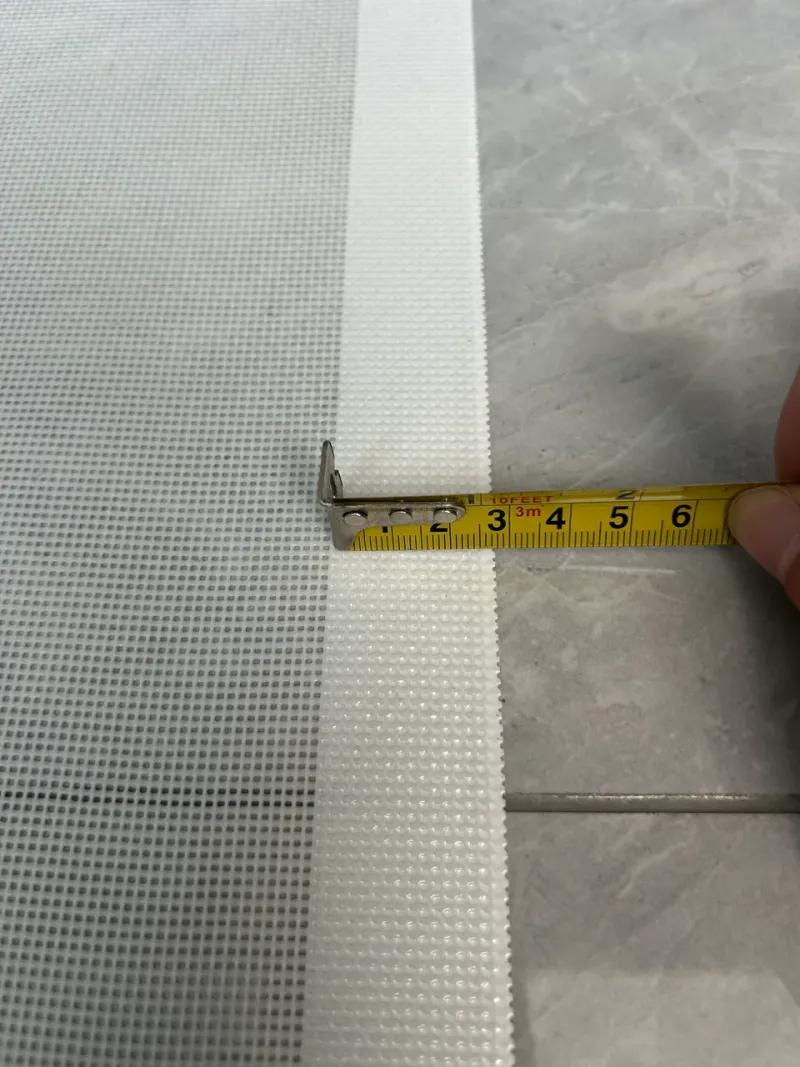
| Drawing item | What to record | Avoid this mistake |
|---|---|---|
| Tray fit | Usable inside dimensions and the required finished liner size. | Ordering from the outside or nominal tray dimensions. |
| Working area | Border width and the remaining open or printed area. | Treating the full mat size as usable mesh area. |
| Holes and corners | Radii, hole diameters and centre positions from reference edges. | Measuring every feature from a different, unmarked edge. |
| Tolerance | Agreed limits for fit-critical features and the inspection method. | Assuming that every dimension has the same tolerance. |
05 / Buyer checklist
Describe one complete operating cycle
Tell us what happens from loading through cleaning. Include normal temperature, peak temperature, time at each temperature and whether the liner touches a heated plate, tray or other hot surface. For continuous equipment, state the run time and replacement routine.
Describe the product in contact: dough, syrup, oil, fruit pieces, puree, packaging film or another process material. Include steam, moisture, pressure, repeated bending, sliding or abrasion. For mesh, identify the support underneath and whether the product shrinks during drying.
Record the cleaning method, cleaning product, dilution, wash temperature and frequency. If a condition has not been measured, write “not yet known.” That is more useful than a guessed temperature or a general request for the highest heat resistance.
06 / Buyer checklist
Define printing, colour and packing by SKU
List each size, colour and artwork combination on its own line. State whether quantities are individual mats, pairs or retail sets. A two-piece set needs a packing specification as well as a product specification.
- Artwork: vector file, print dimensions, position, number of colours and the face to be printed.
- Colour: separate body and border colours; provide a colour reference or physical sample for matching.
- Surface features: measurement scales, baking guides, textured areas and regions that must stay unprinted.
- Adhesive: coverage, side, bonded surface and service conditions, where applicable.
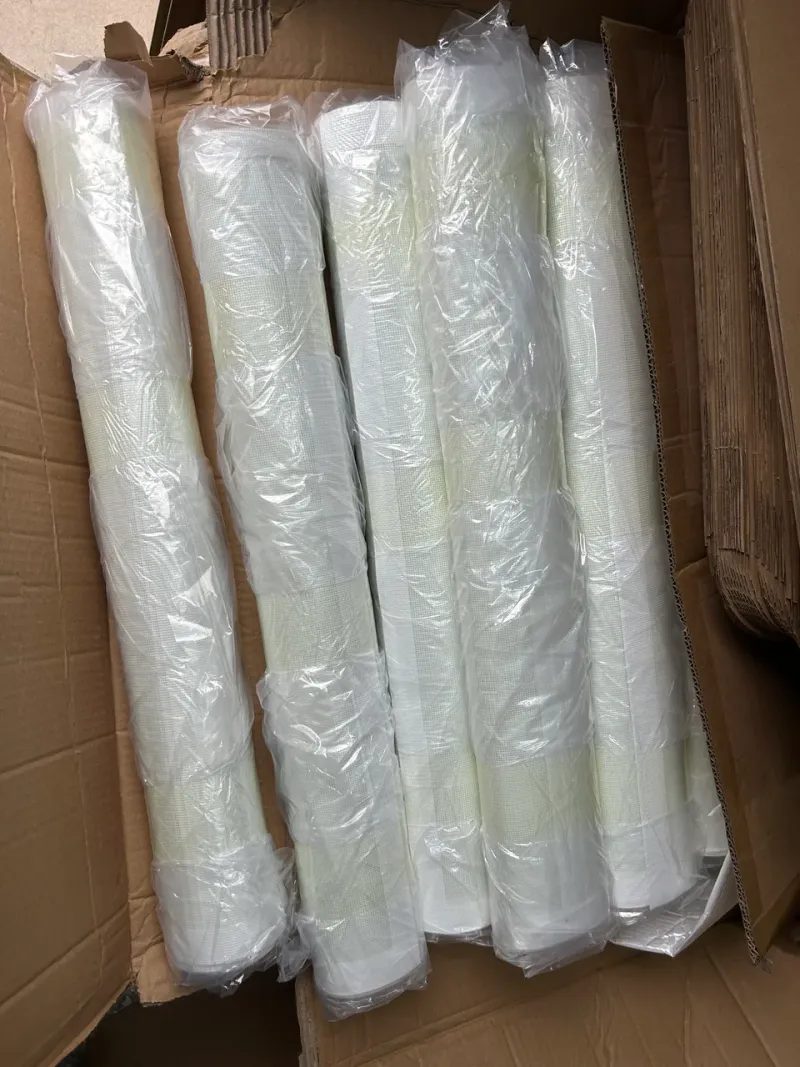
- Packaging: flat or rolled format, pieces per bag or box, label text, barcode and carton quantity.
07 / Buyer checklist
Ask for a quote you can compare line by line
A unit price is useful only when it describes the same finished part. Keep the drawing revision, material construction and packing specification attached to each quotation. Ask for alternatives as separate options so a cheaper construction does not replace the requested one without review.
Custom cutting from an existing PTFE fabric, changing a sealed silicone border and developing a new mesh construction involve different work. Confirm MOQ and tooling against the complete specification instead of applying one number to every custom product.
- Unit price and currency for each size, design and quantity tier.
- MOQ per size, colour and artwork, plus any separate packaging minimum.
- Sample cost, tooling or setup charge, and whether any charge is credited against an order.
- Sample timing and production lead time, including the approval that starts each period.
- Freight basis, named shipping or delivery point, and costs included in the quoted total.
- Payment terms, quotation validity and the process for approving specification changes.
08 / Buyer checklist
Agree the sample checks before placing the order
Use the actual tray or equipment for the sample trial. Agree the number of operating and cleaning cycles, the inspection points and what counts as an acceptable result. Keep a sample identifier with the drawing and trial record.
| Check | What to record |
|---|---|
| Fit and geometry | Dimensions, corners, hole positions, border width and clearance on the actual support. |
| Release and support | Sticking, product retention, surface marking and whether mesh openings support the load. |
| Handling | Installation, removal, flatness, flexibility and any movement during use. |
| After use and cleaning | Edge condition, coating damage, curling, print changes and dimensional change after the agreed cycles. |
| Production reference | Approved drawing revision, material, colour, artwork, packing and sample identifier. |
09 / Buyer checklist
Copy this RFQ template
Fill in the fields you know and leave the rest marked “not yet known.” Paste the brief into your inquiry, or download the text file for your purchasing records.
Buyer questions
Custom mat & liner RFQ questions
Can I request a quote before choosing silicone or PTFE?
Yes. Send the application, contact product, dimensions and operating cycle. Include the current liner and the problem you want to solve. We can review the material options before you approve a sample.
Do I need a CAD drawing for a custom liner?
A dimensioned sketch is enough for an initial review of a simple shape. For cutouts, holes or a complex outline, provide a controlled drawing with units, reference edges and tolerances. Confirm the final drawing before tooling or production.
Is the minimum order the same for every custom mat?
No. MOQ depends on material, size, edge construction, colour, print and packaging. Ask for the minimum for each SKU and each custom option. Separate sample quantities from the production order.
Can I cut a sealed silicone fiberglass mat to fit my tray?
Order it to the required finished size. Cutting through a fully encapsulated mat removes the sealed edge and can expose the fiberglass reinforcement. Include the required outline and clearance in the RFQ.
What if I only have a used liner and a photograph?
Send photos of both faces and the edges, measurements of the usable tray area, and the condition of the old liner. Identify any worn, stretched or damaged areas. Confirm new-part dimensions on a drawing before sample approval.
How do I get a realistic delivery date?
Provide the destination and the date the goods need to arrive. Ask the quotation to separate sample preparation, your approval period, production and transport. Confirm which approvals and payments start the production lead time.
Your next step
Send Your RFQ
Send your application, finished dimensions and quantity to start the review. Add the completed checklist and drawing reference in your message so we can discuss the material, sample and quotation requirements together.
Send Your RFQ