Quick answer
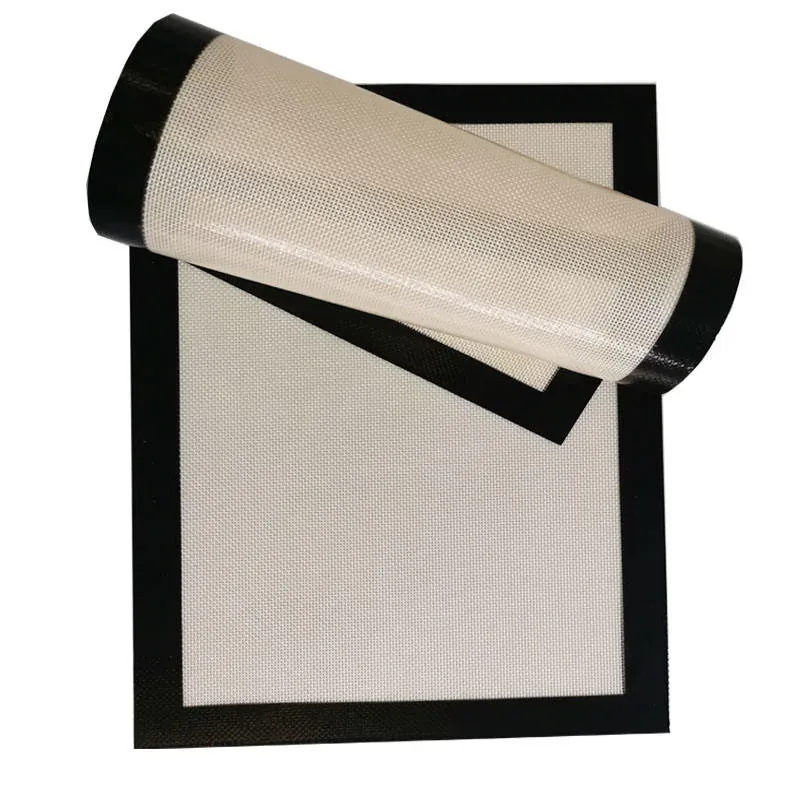
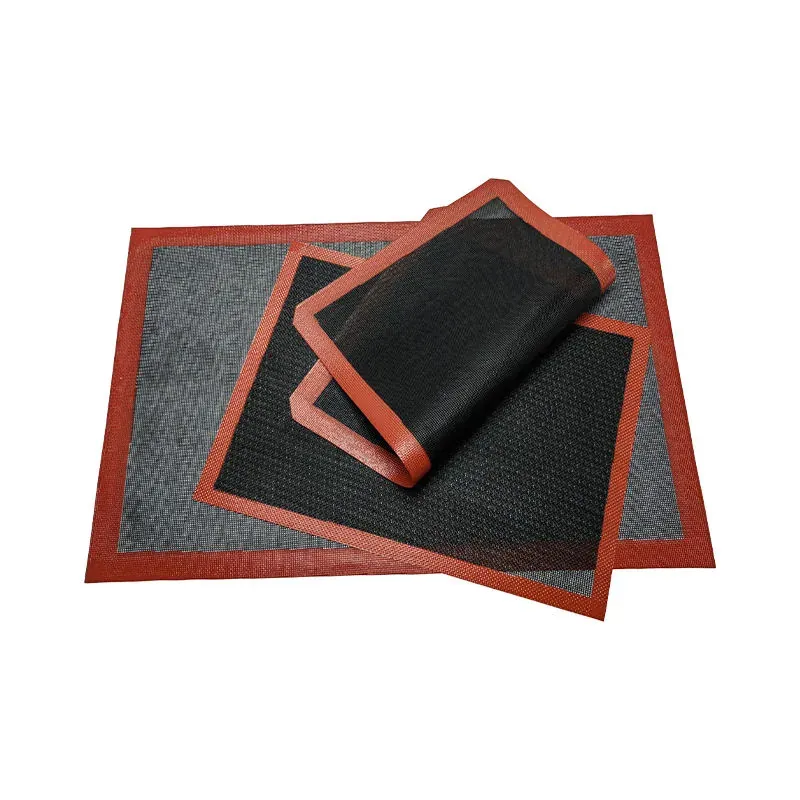
Choose the structure first: a continuous silicone mat supports wet mixtures and small pieces; an open mesh supports through-air processes when the product bridges its openings. Match the product’s thickness and temperature range to your tray and process. Reinforced mats bend readily but do not stretch like unreinforced silicone rubber.
01 / Finished-part reference
Start with the mat construction
A continuous silicone surface may be unreinforced rubber or silicone-coated fiberglass. An open mesh serves a different support and airflow requirement. Confirm the cross-section and working face before comparing thickness or flexibility.
Use the silicone fiberglass fabric guide for reinforcement and coating principles. This page focuses on what to record for the finished mat you intend to buy.
02 / Finished-part reference
SIFMAT silicone mat specifications
Use this comparison to identify a product family. A nominal thickness describes the finished mat; it does not specify coating thickness, mesh opening, stiffness or tolerance.
| Product | Thickness options | Temperature range | Working surface |
|---|---|---|---|
| Silicone Baking Mats | Typical development range: 0.4–2.0 mm; final thickness and tolerance are confirmed for the selected construction. | Recommended continuous operating range: -40°C to +230°C; short-term exposure and final limits depend on the selected construction. | Continuous non-perforated silicone surface |
| Silicone Mesh Baking Mat | Typical range: 0.5–1.0 mm; mesh opening, coating build and finished thickness are confirmed for the project. | Recommended continuous operating range: -40°C to +230°C; final limit depends on the selected silicone system and finished construction. | Open silicone-coated fiberglass mesh with sealed perimeter |
| Large-Opening Silicone-Coated PET Mesh Dehydrator Mat | Overall thickness is specified with mesh opening, open area and finished GSM; values require confirmation for the selected construction | Operating range: -40°C to +160°C. Use this product for steaming, drying and drainage applications within that range; it is not a default high-temperature oven-baking material. | Large-opening silicone-coated mesh with good release performance and drainage |
Select the product family first, then specify the finished size, tolerance and operating conditions for your order. Adhesives, printing and edge treatments may affect the finished part’s suitability.
03 / Finished-part reference
Physical properties to specify
| Field | What to record |
|---|---|
| Structure | Unreinforced silicone, reinforced continuous surface or open mesh; identify the working face. |
| Dimensions | Finished length, width, corners, holes and agreed tolerances. |
| Thickness | Finished thickness, tolerance and measurement method; soft surfaces compress under a gauge. |
| Surface and edges | Finish, printing, coating coverage and edge construction. |
| Mechanical behavior | Flexibility, loads, motion, support and acceptable deformation. |
| Mesh openings | Actual openings and support requirements; a mesh name is insufficient. |
04 / Finished-part reference
Chemical compatibility is an exposure question
List contact liquids and cleaners with concentration, temperature, time and frequency. Inspect the finished assembly after exposure, including coating, edges, printing and adhesive.
Compatibility depends on the liquid and the exposure. A cleaner used briefly at room temperature can affect a mat differently from a hot, concentrated solution used repeatedly. Include concentration, contact time and cleaning frequency in the specification.
05 / Finished-part reference
Read temperature data with its conditions
Request normal-operation and short-exposure limits where relevant, with duration, frequency and test conditions. Distinguish hot air from contact with a hot plate or product.
Evaluate the complete part. Printed layers, adhesives, seams and edge treatments can affect suitability. A dry-heat rating does not establish suitability for steam or flame.
- Normal temperature and cycle duration.
- Peak exposure, frequency and contact mode.
- Pressure or movement while hot.
- Properties the mat must retain after use.
06 / Finished-part reference
Compare structures before comparing numbers
Unreinforced rubber and a reinforced mat should not be assumed to stretch or bend alike. Continuous and mesh mats of similar thickness may differ in support and airflow. Compare finished samples under the same loading and conditions.
07 / Finished-part reference
Connect specifications to the application
- Bakery: tray fit, release, dough support and base texture.
- Drying: retention, openings, airflow path and cleanability.
- Industrial lining: temperature, friction, chemicals and support.
- Printed mats: artwork orientation, surface contact and inspection after use.
08 / Finished-part reference
Cleaning, inspection and troubleshooting
Allow the mat to cool before handling. Remove loose residue with a non-abrasive tool, use the cleaning method specified for the product, rinse where required and dry before storage. Inspect both faces and the edges; for mesh, include the openings and strand intersections.
Do not use a sharper scraper to solve persistent sticking. First establish whether you are seeing residue, a change in the process, or damage to the working surface.
| What you see | What to check | Next step |
|---|---|---|
| Sticking after previously good release | Residue, recipe changes, temperature cycle and surface wear. | Compare with a clean, undamaged sample under the same settings. |
| Residue in mesh openings | Cleaning access, opening size and product entering the mesh. | Review the approved cleaning method and whether a continuous liner suits the product better. |
| Curling or poor fit | Finished dimensions, tray support, storage folds and heat exposure. | Check the cooled part against the drawing and an unused sample. |
| Cuts, peeling or exposed reinforcement | Damage to the contact face and edges. | Remove the damaged mat from product-contact service and arrange replacement. |
| Swelling or persistent softening | Cleaner, concentration, temperature and contact time. | Stop that exposure and review compatibility before reuse. |
09 / Finished-part reference
Prepare a complete specification request
- Application, equipment and contact product.
- Finished dimensions, units, tolerances and quantity.
- Continuous or open surface and reinforcement.
- Operating and cleaning conditions.
- Printing, edges, adhesive or packaging.
- Destination, documents and sample acceptance checks.
Your next step
Request Product Specifications
Share the intended use, construction if known, finished dimensions and operating conditions so our team can identify the information needed for selection.
Request Product Specifications