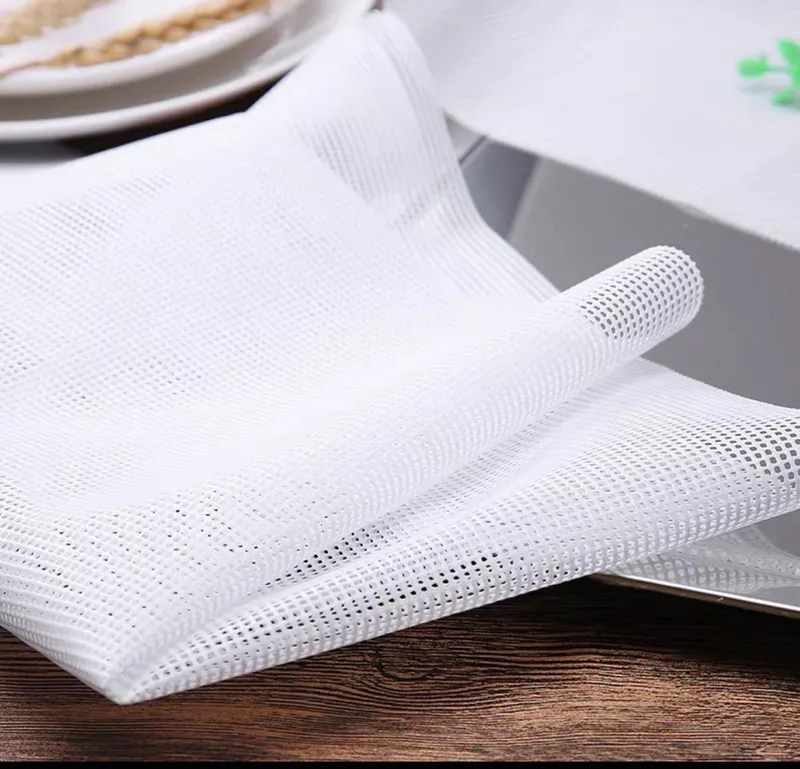
Quick answer
Choose silicone-coated PET mesh for food drying and steaming within the finished product’s approved heat and wet-use conditions. Choose silicone-coated fiberglass mesh for oven baking and hotter tray cycles. Both are open meshes: the food size, tray support and cleaning method still determine the right opening and edge finish.
01 / Mesh material comparison
The coating is similar; the reinforcement is different
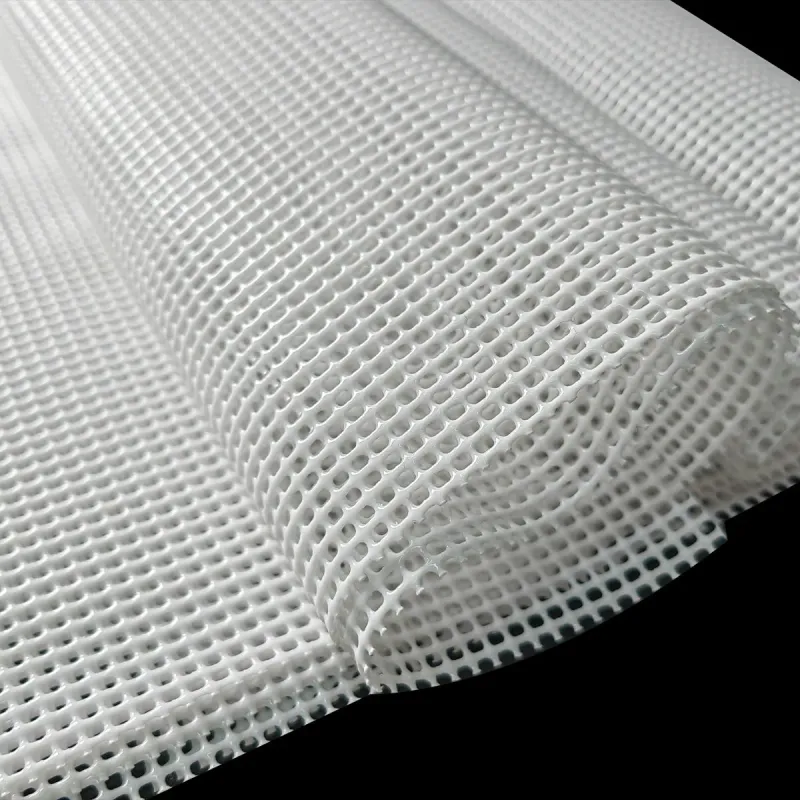
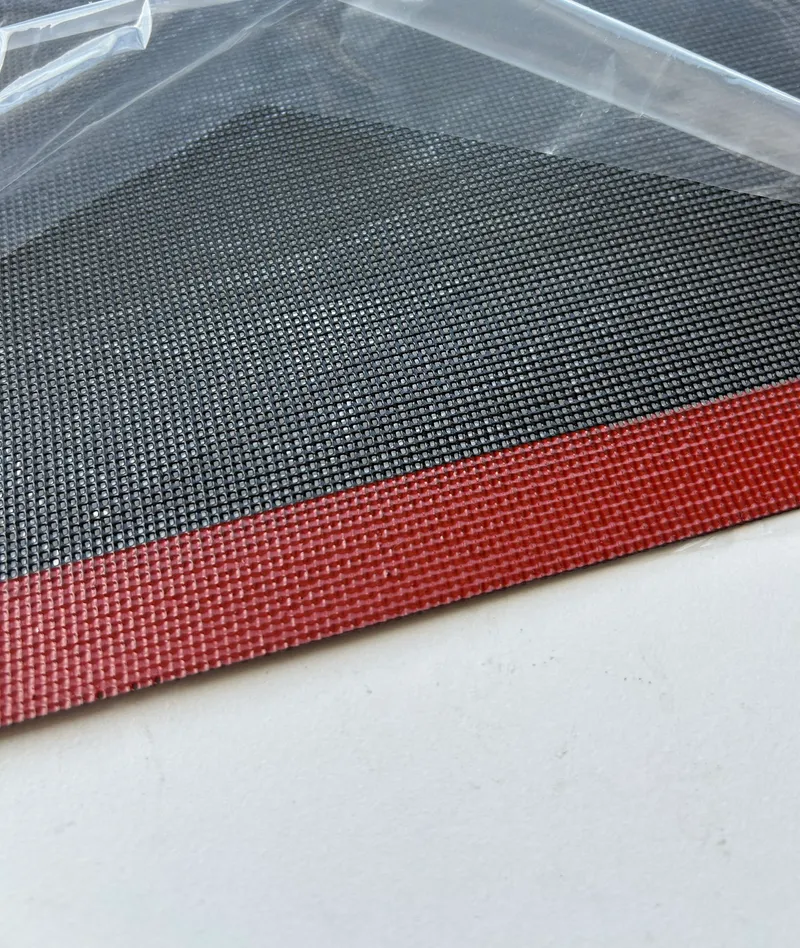
Both products put a silicone working surface around an open woven mesh. The strands underneath are the difference. PET polyester forms the flexible core of a drying or steaming mesh; glass fiber forms the core of a baking mesh that can be specified for higher oven temperatures.
Do not identify the reinforcement by color or by the word “silicone” in a listing. Ask for the finished construction, including the core fiber, coating, opening and edge treatment. “Polyester” should be confirmed as PET when that distinction matters to the order.
02 / Mesh material comparison
Choose the reinforcement around the actual process
A dryer, a steamer and an oven do different work even when all three need air or steam to pass through the liner. Start with the highest temperature the finished sheet sees, the time at that temperature and whether the exposure is dry or wet.
| Process | Start with | Check on the sample |
|---|---|---|
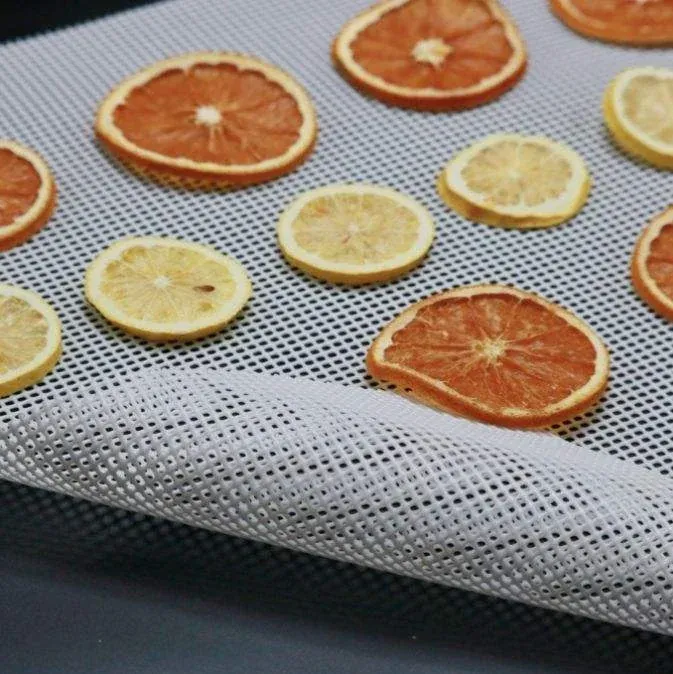
| Fruit, vegetables or pet treats in a dehydrator | Silicone-coated PET mesh | Food retention, airflow through the loaded tray and cleaning after the drying cycle. |
| Steaming or drainage | Silicone-coated PET mesh for a confirmed wet-heat grade | Repeated steam exposure, dimensional change, drainage and the approved wash method. |
| Bread, pastry or buns in an oven | Silicone-coated fiberglass baking mesh | Oven cycle, tray fit, underside finish, release and the sealed border. |
| One site using both dryers and baking ovens | Specify separate liners for each process | Do not move a PET drying sheet into a baking oven because its coating contains silicone. |
03 / Mesh material comparison
Read temperature limits for the finished mesh
SIFMAT’s current PET drying-mesh product record lists an operating range up to 160°C and positions it for steaming, drying and drainage. The fiberglass baking-mesh record lists a recommended continuous range up to 230°C. These are product-family selection ranges; the final limit belongs to the selected coating, reinforcement and finished edge construction.
A fiber’s melting point or a silicone compound’s heat rating does not rate the assembled liner. Give the supplier the normal cycle, peak exposure, contact surface and cleaning temperature, then confirm the finished sample against those conditions.
04 / Mesh material comparison
Match the openings to the food, not just the airflow
An open mesh only helps when air or steam can reach it. Put it on a tray or rack that leaves a flow path below the sheet. Match the clear opening to the smallest food piece and to how soft it becomes during processing.
A wider opening exposes more flow path but gives soft fruit, dough or small pieces less support. A finer opening retains more product but can trap residue. Compare both options under a loaded tray rather than choosing by a photo of the empty mesh.
05 / Mesh material comparison
Inspect the edges and the cleaning route
PET mesh can be supplied as cut sheets or converted formats, with the edge chosen for the tray and wash routine. On fiberglass baking mesh, the sealed perimeter protects the woven edge and helps the mat keep its finished shape. Cutting a sealed baking mat after delivery removes that finished edge.
Check the mesh intersections and perimeter after the actual wash cycle. Reject a sample with exposed reinforcement, loose strands, coating separation or an edge that catches food or cleaning tools. For repeat steam duty, record any change in the PET sheet’s dimensions as well as the surface condition.
06 / Mesh material comparison
Compare the SIFMAT product families
Use these product records to identify the starting construction. The order specification should then state the exact finished dimensions, opening, thickness, border and operating cycle.
| Product | Thickness options | Temperature range | Working surface |
|---|---|---|---|
| Silicone-Coated PET Mesh Dehydrator Mats | Overall thickness is specified with mesh opening, open area and finished GSM; values require confirmation for the selected construction | Operating range: -40°C to +160°C. Use this product for steaming, drying and drainage applications within that range; it is not a default high-temperature oven-baking material. | Open silicone-coated mesh with good release performance and drainage |
| Silicone Mesh Baking Mat | Typical range: 0.5–1.0 mm; mesh opening, coating build and finished thickness are confirmed for the project. | Recommended continuous operating range: -40°C to +230°C; final limit depends on the selected silicone system and finished construction. | Open silicone-coated fiberglass mesh with sealed perimeter |
Select the product family first, then specify the finished size, tolerance and operating conditions for your order. Adhesives, printing and edge treatments may affect the finished part’s suitability.
07 / Mesh material comparison
Approve one finished sample in its real cycle
- Record the equipment, tray, food, normal and peak temperatures, cycle time and wash method.
- Measure the clear opening, finished sheet size and edge width before use.
- Run the loaded tray; check retention, release, underside finish and whether the openings clog.
- After cleaning, check curl, dimensional change, coating condition and edge integrity.
- Approve the construction and sample identifier before repeating the order.
Your next step
Choose a Mesh for Your Process
Send the equipment and tray dimensions, food type, operating and cleaning cycles, preferred opening, required quantity and target market. We can match a PET drying mesh or fiberglass baking mesh to that brief.
Choose a Mesh for Your Process